A Shield Against Alcohol- and Drug-Induced Cardiotoxicity
Small Molecules for Cardioprotection
While cancer therapies can save lives, they can also put a patient's heart at risk.
Cardiotoxicity, a form of heart muscle or blood vessel damage caused by certain cancer therapies and long-term heavy alcohol use, can lead to heart failure. Because cardiotoxicity is a leading cause of drug withdrawal, there is a critical need for therapies that protect the heart without compromising treatment efficacy.
A team of Emory researchers has identified a small molecule as a potential cardioprotective agent shown to protect human-induced pluripotent stem cells from alcohol- and drug-induced cardiotoxicity by mitigating chemotherapy-induced mitochondrial defects without affecting its cancer-killing ability.
Balancing Cardioprotection and Chemotherapy
“Currently, there are not many options on the drug market for cardioprotection because there are many types of chemotherapy drugs,” said Chunhui Xu, PhD, the technology’s principal investigator.
With so many chemotherapies available, each with their own complicated chemical makeups and biological responses, it is difficult for cardioprotective drugs to achieve broad efficacy.
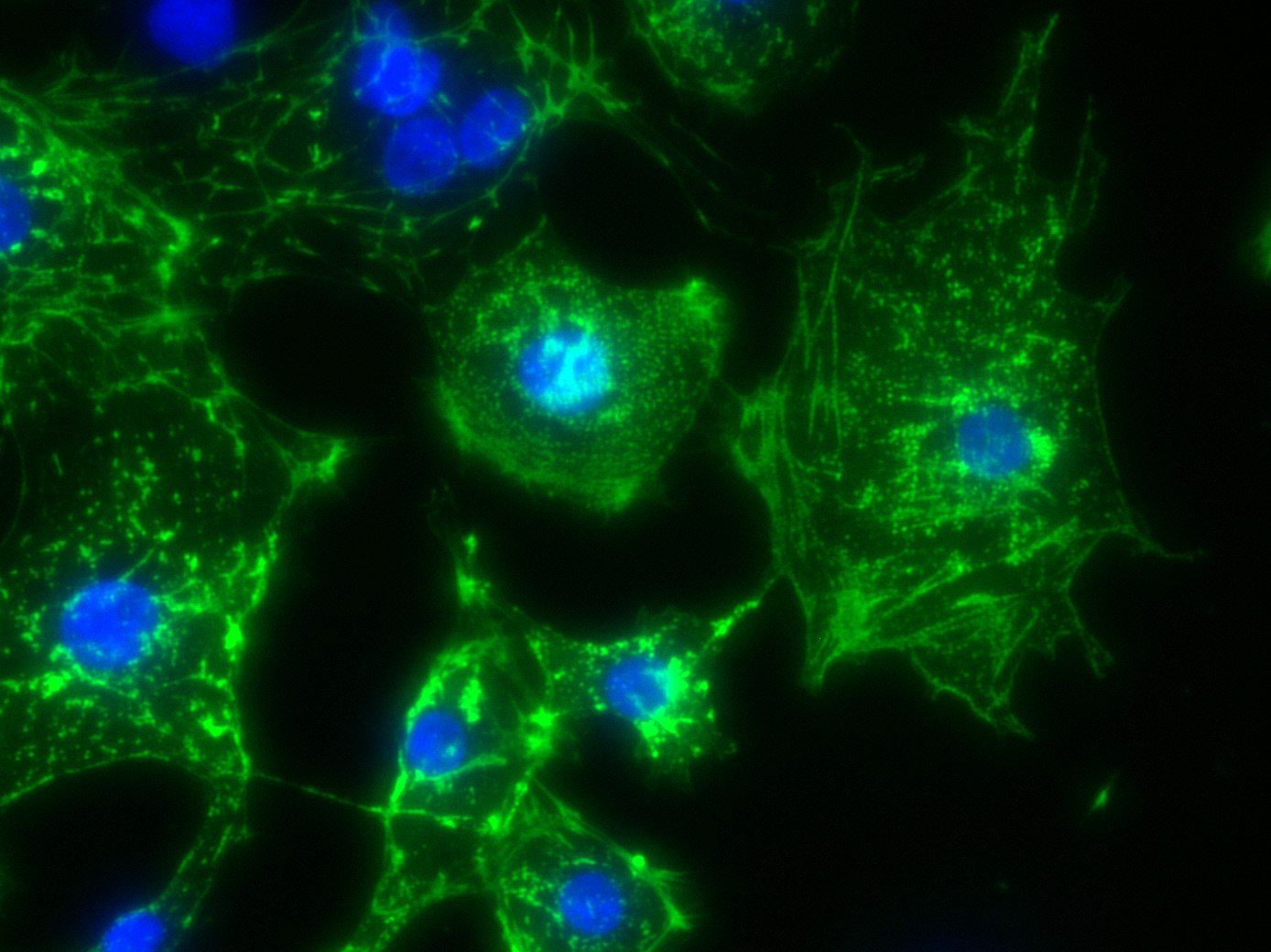
Stained proteins in cardiac muscle cells.
Chunhui Xu
In fact, there is currently only one FDA-approved drug, dexrazoxane, that helps protect the heart from damage caused by a common class of chemotherapy drugs called anthracyclines. But its use is limited due to its severe side effects and it is not approved for all patient groups, including children.
Other cancer treatments can also cause heart damage. One example is carfilzomib, a highly effective drug used to treat a type of blood cancer called multiple myeloma. However, up to 18% of patients receiving carfilzomib develop heart-related side effects. Because of this, the drug is only given to the highest-risk patients, when its potential benefits outweigh the risks.
Despite the important medical need, there is currently no approved treatment that can specifically prevent alcohol- and drug-induced heart damage. Thus, there is a large market opportunity for drugs that can be taken concurrently with cancer therapeutics to prevent cardiotoxicity without lessening the cancer treatment’s effectiveness.
Finding a Candidate for Cardioprotection
Xu and her team have identified potential cardioprotective agents after screening over 2,000 small molecules using a technique relying on human-induced pluripotent stem cell cardiomyocytes (hiPSC-CMs), or lab-grown heart muscle stem cells. These stem cells allow the researchers to study how the heart cells respond to chemotherapy and how cardiotoxicity damages the cells’ mitochondria, or energy centers.
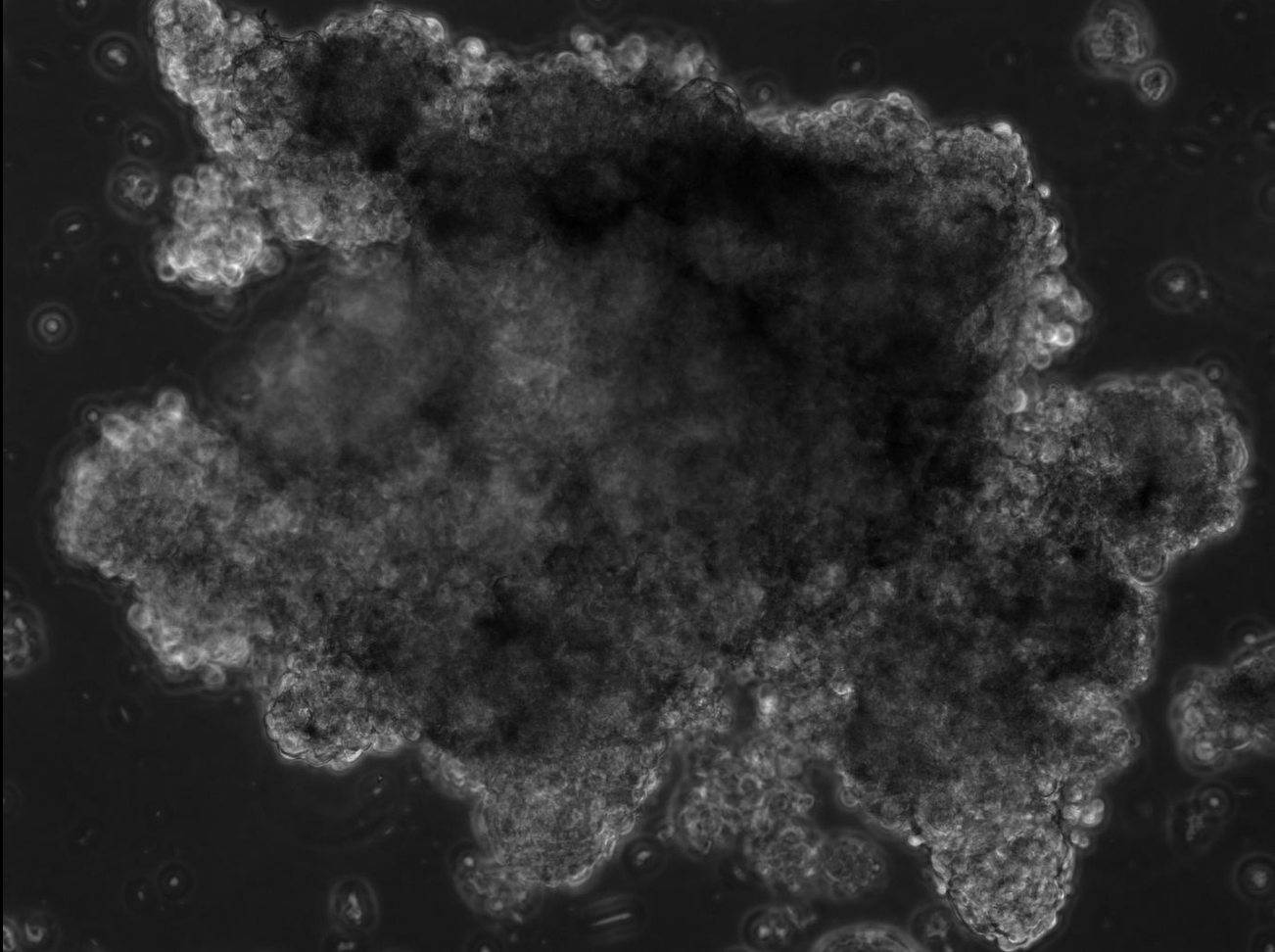
Cardiac microtissue.
Chunhui Xu
Further, with the high-throughput drug discovery technology from Emory Chemical Biology Discovery Center led by collaborators Yuhong Du, PhD, and Haian Fu, PhD, these cells can be used to screen approximately at least 1,500 samples at a time, making them a highly effective way to identify cardioprotective agents.
One of the agents was shown to protect the stem cells from alcohol- and drug-induced cardiotoxicity by mitigating cell defects caused by cancer therapeutics like carfilzomib and doxorubicin. Importantly, the compound does not reduce the cancer-fighting effects of carfilzomib, a key requirement for developing a heart-protective treatment that can be used safely alongside cancer therapy.
“We’ve shown this compound can prevent the toxic effects of chemotherapy,” said Xu.
Xu believes that the compound may have a broad impact for cardioprotection against many lead chemotherapy drugs, something Shweta Ghai, PhD, the technology’s case manager, echoes.
“This invention addresses a critical unmet need in cardiotoxicity by offering broad cardio-protection for patients of all ages while complementing the growing chemotherapeutics market,” said Ghai.
Taking the Next Steps
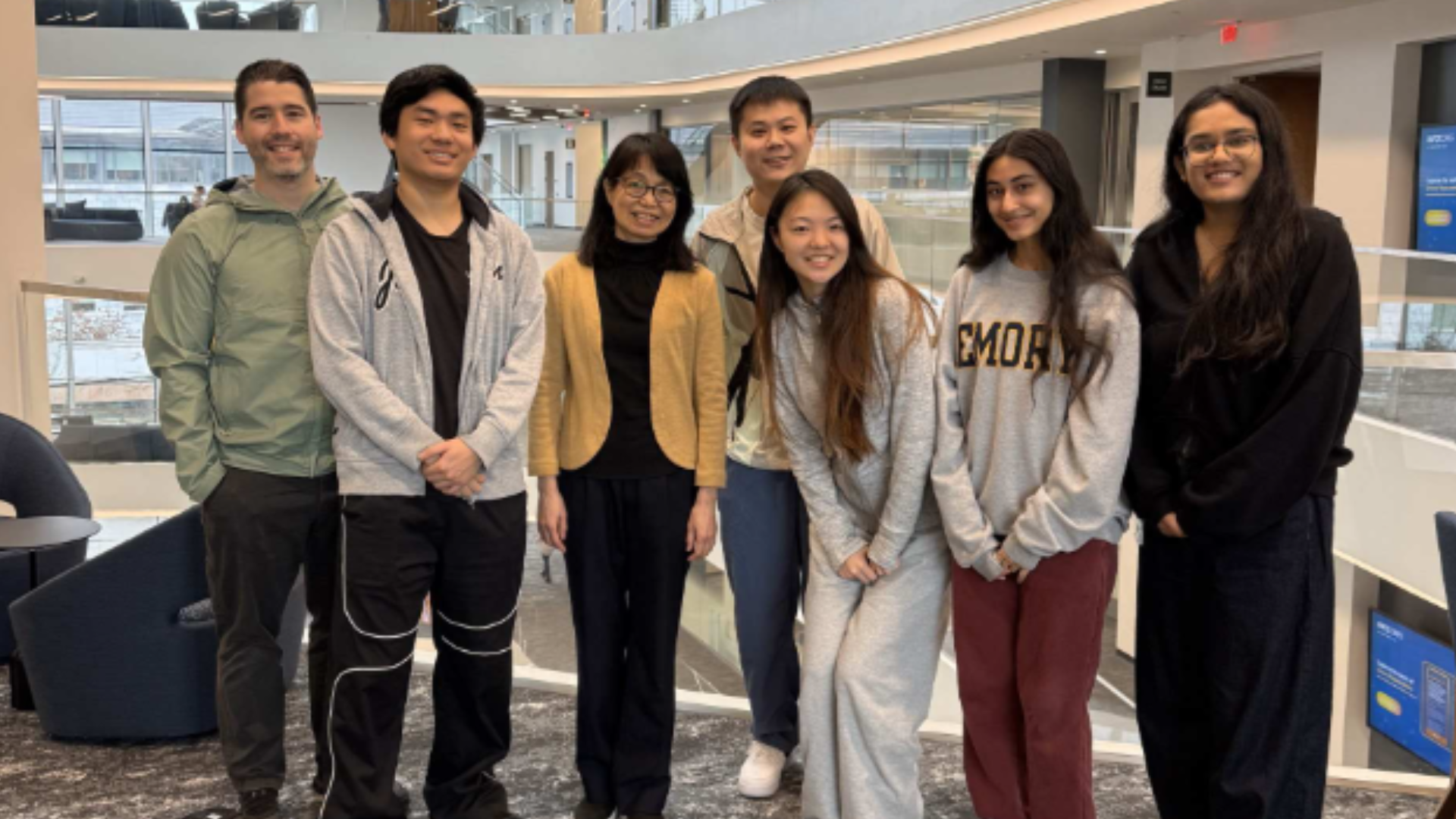
Members of the Xu lab. From left: Michael Fundora, MD (clinical collaborator); Matthew Wang; Chunhui Xu, PhD; Wenhao Zhang, PhD; Stephanie Li; Sia Vij; Gayatri Patel.
Chunhui Xu
The inventors have identified effective doses for the compound in their trials, and they are working on publishing their findings. While their patent is pending, they are conducting further research into the biology of cardioprotection and conducting trials on additional cell models.
“We have a wonderful team working on this, and of course my lab members and our collaborators, so we had great expertise on this research and to help us develop further,” said Xu.
— Jenna Woods
TechID: 23068
Learn more about this technology in the non-confidential summary.
Are you an industry partner looking to license this technology? Reach out directly at omarket@emory.edu.